Summer gardening in hot weather rests on three habits: soak the soil properly, keep it covered, and give plants shade where you can. Water first thing so moisture reaches roots before the sun dries it away, mulch beds to slow evaporation, and shift pots out of the harshest afternoon sun. Those basics carry most plants through a dry spell far better than a quick daily sprinkle.
This guide also tackles an awkward real-life problem: going away in the middle of a heatwave. With a little preparation — grouped pots, shade, and a neighbor watering thoroughly twice a week — a garden can usually survive a week or two of heat, even in Australia, where summer runs December to February.
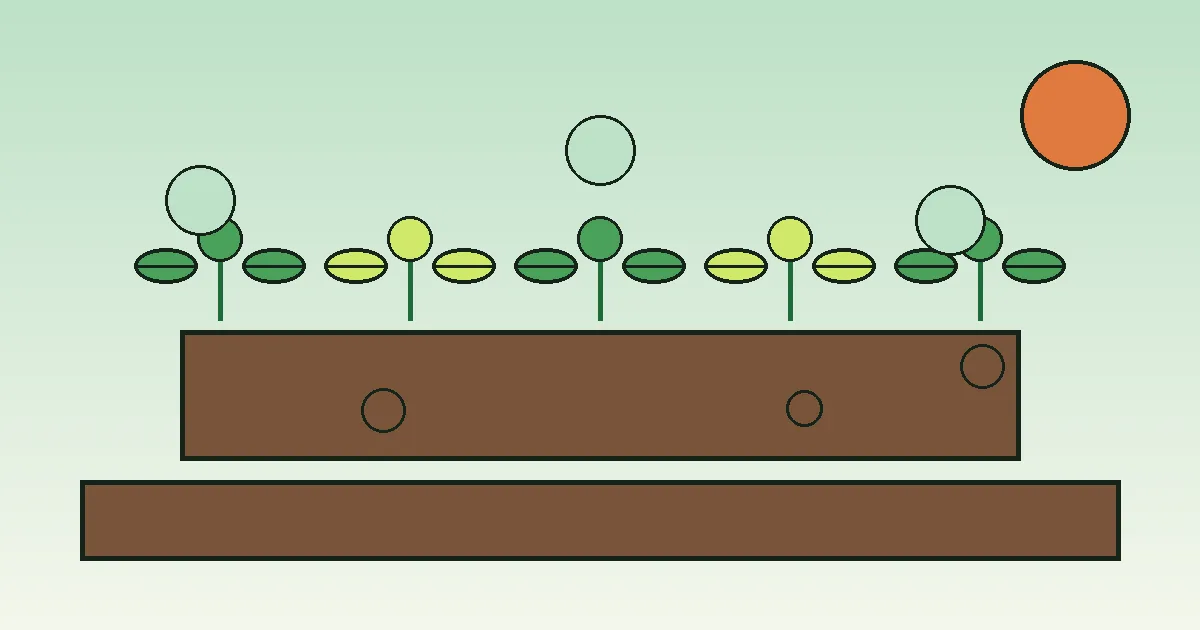
Soak the Roots, and Choose the Right Hour
Deep watering means getting moisture down to the root zone, not just dampening the surface. Push a finger into the soil after watering: if only the top centimeter is damp, the roots below are still dry. Water slowly, let it sink in, then water again if the surface dries quickly — especially in pots and raised beds.
Morning suits most climates best. Plants take up water before the heat peaks, leaves dry during the day, and less is lost to evaporation than at midday. Evening watering is a reasonable second choice, but wet leaves overnight can invite disease, so aim water at the soil rather than the foliage.
Mulch, Shade and a Steady Hand
After water, mulch is the simplest defense against heat. A layer several centimeters thick — bark, straw or compost — shades the soil, cuts evaporation and keeps roots cooler. Keep it away from stems, top it up as it thins, and water first, since fresh mulch on bone-dry soil can shed water instead of letting it through.
Shade need not be fancy. Morning sun with afternoon shade, shade cloth over a simple frame, or a taller plant sheltering a smaller one can all lower leaf temperature. At the same time, hold back on heavy pruning and strong feeding in a heatwave: both can push soft growth or expose tissue that scorches. For the seasonal context, see A Garden Year in Four Seasons: Care That Keeps Plants Thriving.
Heading Off on Holiday in a Heatwave
A holiday in a heatwave is when most gardens fail, and it is usually avoidable. In the week before you go, water deeply, mulch, pull pots into grouped shade and pick ripe produce. Pots clustered together create a cooler, more humid pocket, and saucers underneath for that week alone can help plants survive.
Ask a neighbor to water thoroughly twice a week instead of lightly every day, and show them which plants matter most. Leave a short written note: which beds, how long to run the hose, and what to leave alone. Without a helper, water reservoirs and shaded grouping give plants a fighting chance, but a fortnight of extreme heat with no water will test even the toughest plants.
What to Avoid When It Is Dry
Do not rescue a stressed lawn with a sudden dose of fertilizer. Dry roots burn easily, and the soft growth it pushes wilts fast. Do not mow very short either — longer grass shades its own roots and holds moisture better. A lawn that browns in drought usually greens up when rain returns; a scalped lawn may not recover.
Avoid planting new shrubs or trees mid-heatwave unless you can water them properly every day. Their roots have not spread yet, so they depend on you entirely. If planting cannot wait, pick a cooler spell, plant in the evening, water deeply and mulch well. Waiting a few weeks is rarely a mistake in summer heat.
Key takeaways
- Give roots a deep morning soak, with water aimed at the soil, not the foliage.
- Water first, then mulch, and pull pots out of the harsh afternoon sun.
- Going away? Cluster pots in shade, mulch well, and ask someone to water deeply twice a week.
- Hold off on hard pruning and strong fertilizer while it is hot.
Frequently asked questions
How often should I water during a heatwave?
Judge by the soil, not the date. When the top few centimeters have dried, soak the root zone properly — daily for pots, perhaps, but only every few days for beds, depending on soil, wind and heat.
Should I water in the morning or the evening?
Morning is usually better: plants use the water before heat peaks and leaves dry during the day. Evening watering works too, but keep water off leaves to reduce disease risk.
Will a brown lawn come back after drought?
Usually, yes, if crown and roots are alive. Keep grass longer, hold off heavy feeding while dry, and water deeply once rain or watering resumes instead of sprinkling lightly.