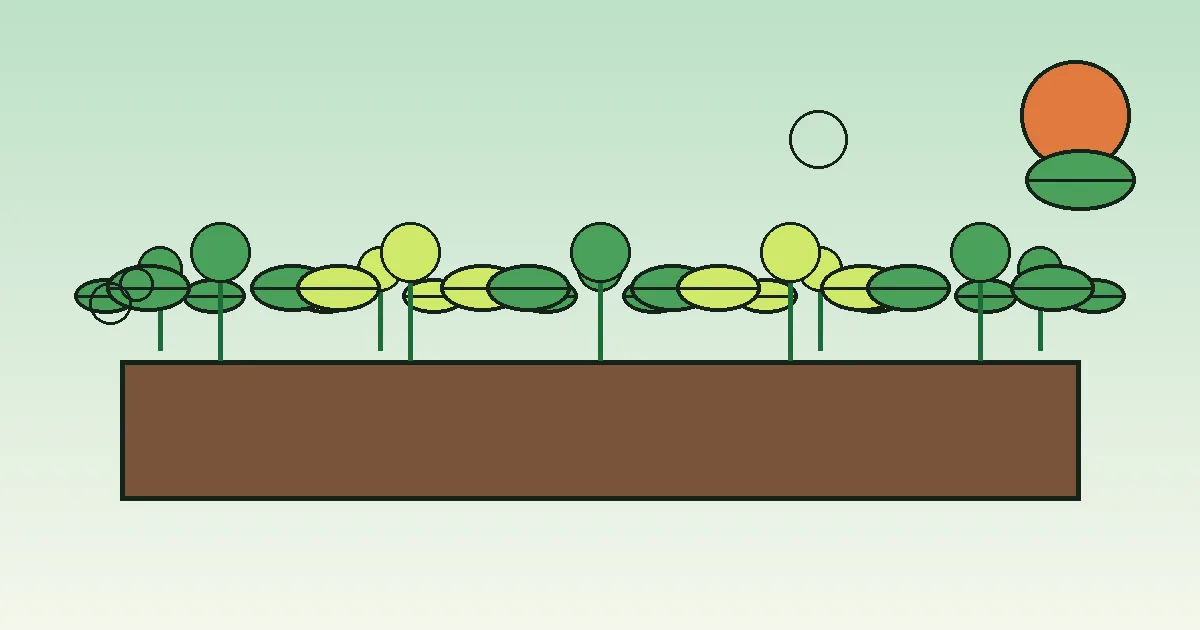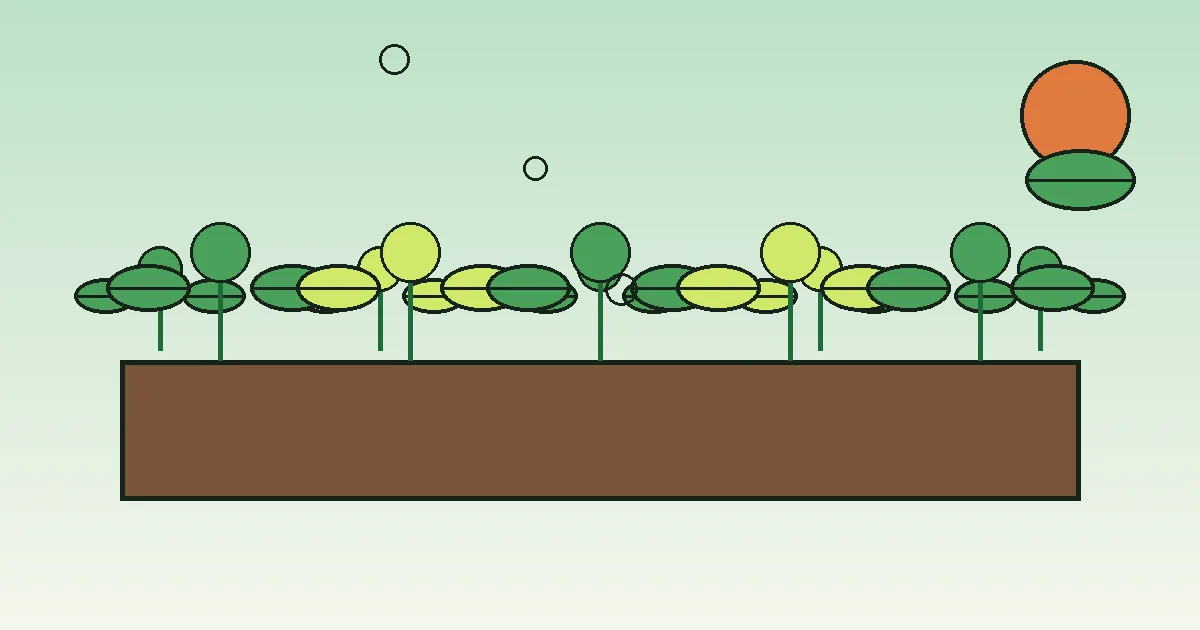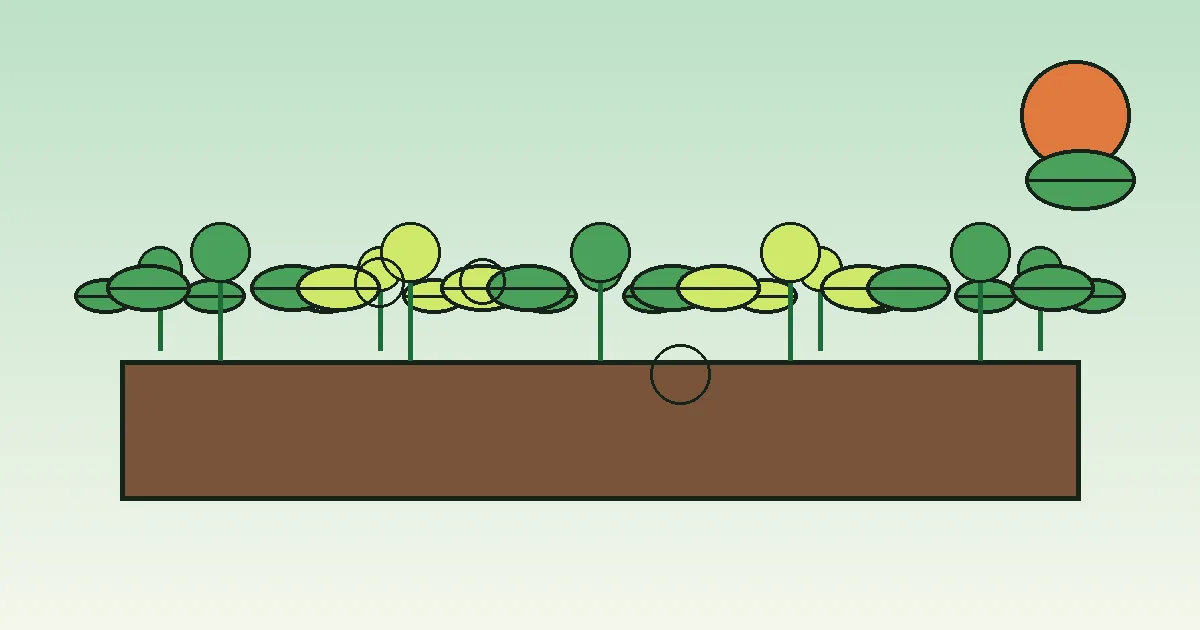
Instead of sowing everything at once, succession planting staggers small batches through the season and fills each gap the moment a crop finishes. The result is a steady supply of fresh food rather than one overwhelming glut. Lettuce, radishes, beans, and salad leaves take to this rhythm especially well, and the method works in beds of any size.
The only catch is routine: a small sowing every fortnight, even when the bed already looks full. Drop the habit and a first garden swings from bare soil to a glut, then back to bare soil.
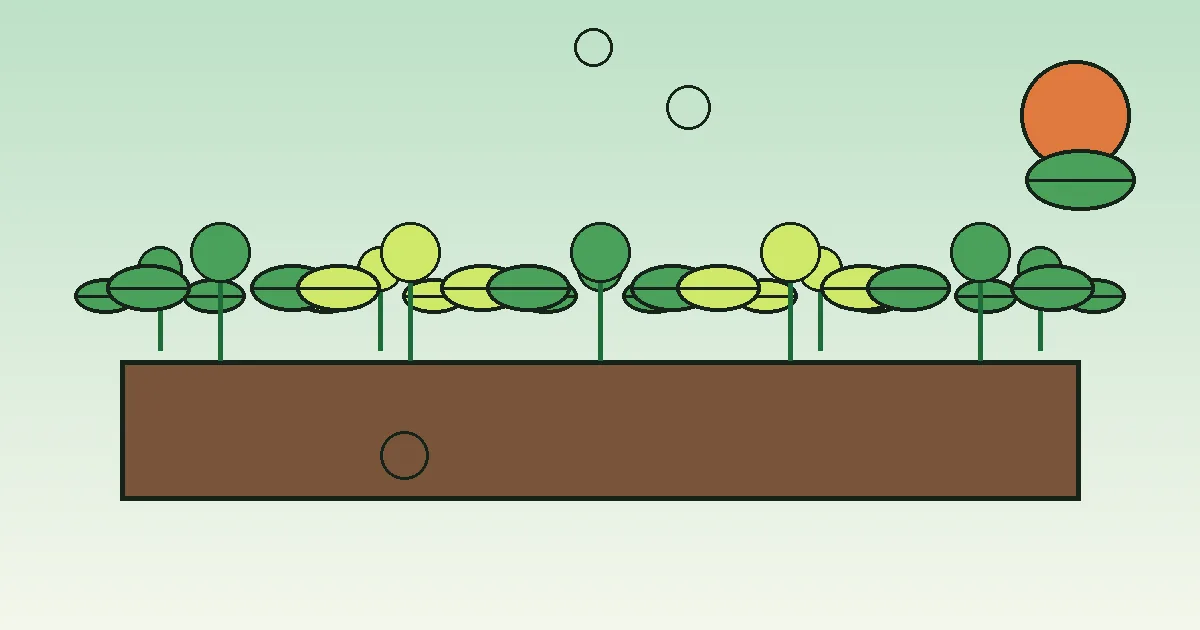
Sow Little and Often Instead of All at Once
Sow a whole packet of lettuce on one day and you will have a mountain of leaves for a fortnight, then nothing. Sow a short row every two weeks instead, and the supply rolls along at the pace your household actually eats. Radishes, spring onions, and bush beans work the same way — and spreading the sowings means one cold snap or slug attack costs you a single batch, not the whole crop.
A simple rhythm keeps it going — every other Sunday, say. Date each row on a label or in a notebook, because rows blur once everything is green. And if one batch fails, only a fortnight is lost, not the season.
Replant Each Gap the Week It Appears
An empty row is both a missed meal and an invitation to weeds. Once early peas are done, or lettuce bolts in summer heat, pull the spent plants out, fork in some compost, and sow something suited to what comes next — beans for a hot, dry summer, or spinach and autumn lettuce as the days shorten.
Let the time left decide, not wishful thinking. Ninety-day crops will disappoint if frost comes in sixty days, while a fast crop sown late can still surprise you. Read the packet's days-to-harvest, check your local first frost date, and choose honestly. In Australia, frost dates vary sharply between climate zones, so plant for the heat ahead.
Grow Fast Crops Alongside Slow Ones
Intercropping is succession's quiet partner. Tuck radishes or lettuce between slow crops such as tomatoes, cabbage, or parsnips, then harvest the fast crop before the slow one needs the room. The bed looks full from the start, weeds find less space, and you are eating while the main crop is still growing. Just leave enough room for light and air — crowding helps nobody.
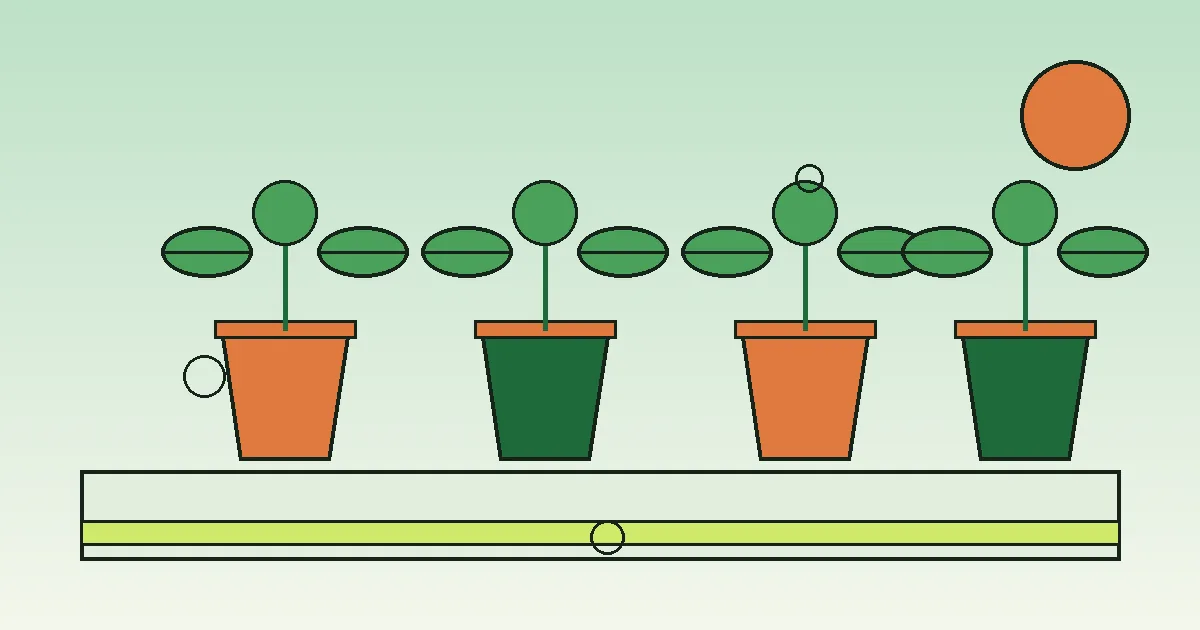
This matters most where space is tight. In a rented garden, every square foot has to earn its keep; on a small balcony, tomatoes with lettuce tucked around the base give two harvests from a single container. Mixed plantings need more frequent checks, but the bed is rarely left idle.
Keep Notes and Next Season Gets Easier
Succession planting means small decisions all season long, and memory alone will not hold them. Jot down sowing dates, varieties, and results — three short lines a month is enough. Within one season you will know which lettuce bolts first in heat and how late spinach can still be sown before frost.
With a record like that, year two runs on what you know instead of guesswork — you simply repeat the wins. For the bigger picture, see How to Grow Your First Vegetable Garden That Feeds You, and when pests break a sequence, Pests and Plant Problems, Naturally is a useful companion.
Key takeaways
- Sow short rows every two weeks for a steady supply instead of one glut.
- Fill each gap quickly with something suited to the season ahead.
- Tuck fast crops between slow ones to make every square foot count.
- Write down sowing dates and results so next season repeats the wins.
Frequently asked questions
What does succession planting mean?
It means sowing small batches at intervals and replanting gaps as crops finish, so the harvest keeps coming across the season. Lettuce, radishes, beans, and salad leaves suit it especially well.
How often should succession crops be sown?
Lettuce, radishes, and spring onions do well sown every two weeks; beans are happy with three weeks between sowings. A simple calendar rhythm stops sowings slipping in busy weeks.
What grows well after peas finish?
Beans, summer lettuce, or autumn spinach all work, depending on how much time is left before frost. Fork some compost into the gap first — the peas will have used nutrients.