Cuttings root best when you start with healthy, firm stems, cut just below a leaf joint, and give them bright indirect light with steady moisture — without drowning them. Pothos, spider plants and many trailing plants root readily this way, and one healthy parent plant can supply several new plants over a season.
Most failures share the same few causes: a cutting taken from weak or flowering growth, a jar left in direct sun until the water warms and clouds over, or roots left in water so long they struggle to adjust to compost. Avoid those, and propagation becomes a reliable habit instead of a gamble.
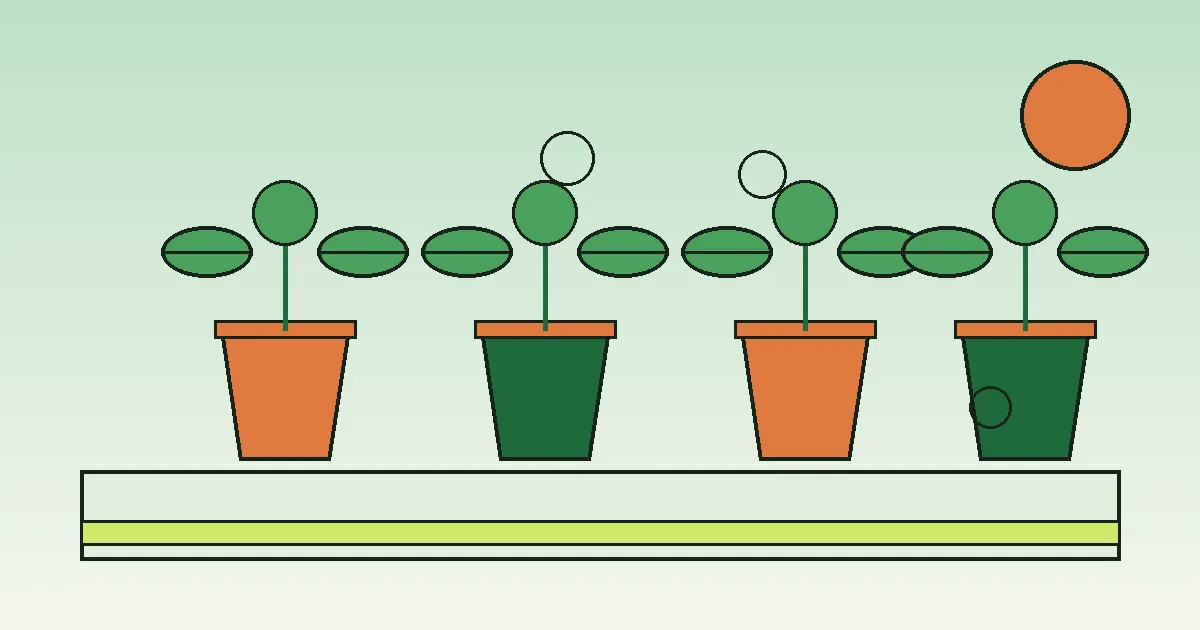
Picking a stem worth cutting
Look for a stem that is firm, green and actively growing, with at least two or three healthy leaves. Skip stems that are yellow, very soft or covered in flowers — flowering stems often root poorly and weak stems rot quickly. A plant bought on impulse from a supermarket may need a few weeks to settle before it makes a good parent, so let it recover first.
Use clean, sharp scissors or a knife, and cut just below a leaf joint, where roots naturally form. A cutting about ten to fifteen centimetres long, with the lowest leaves removed so none sit in water or compost, is a practical example size for pothos and similar trailers.
Water rooting without the usual rot
Stand the cutting in a clean glass of room-temperature water, with the leaf joint under water and the leaves above it. Keep the glass in bright indirect light — not on a hot south-facing sill in summer — and change the water every few days so it stays clear.
Roots usually show within two to four weeks, though some plants take longer in winter. Pot the cutting up once the roots are a few centimetres long, because very long, water-grown roots adjust badly to compost. Plant into moist, free-draining compost, water well, and keep it out of direct sun for the first week.
Rooting straight into compost for stronger plants
Rooting in compost often produces stronger plants, because the roots grow in the medium they will live in. There is no need for anything fancy — just plant the cut end about two to three centimetres deep in moist compost, firm it gently, and cover loosely with a clear plastic bag or a bottle top with a few air holes to hold humidity.
Keep the compost lightly moist rather than wet, and after a few weeks give the cutting the gentlest of tugs: a little resistance suggests roots have formed. A warm room with bright indirect light, such as a kitchen sill out of direct sun, suits most common houseplant cuttings in the USA, UK, Canada and Australia alike.
Aftercare, and keeping expectations honest
New plants grow slowly at first while their roots establish, so do not expect a full trailing plant within a month. If a cutting fails, try again with a fresh stem in spring, when parent plants are growing strongly and success rates are at their best.
Not every plant grows from a stem cutting. Some need division, leaf cuttings or offsets, and a few popular plants rarely root well at home at all. That is plant biology, not a failure of technique. For help choosing parent plants that cope well indoors, see Indoor Plants for Low-Light Rooms That Still Look Good.
Key takeaways
- Choose firm, healthy stems and cut just beneath a leaf joint.
- Root in bright indirect light, change the water often, and pot up early.
- Rooting in compost gives stronger roots but needs steady, light moisture.
- Spring cuttings root fastest; a failed cutting is normal and worth retrying.
Frequently asked questions
How long do cuttings take to root?
In warm, bright indirect light, most easy houseplants form roots within two to four weeks. In winter, or with slower plants, it can take six weeks or more — judge by the roots, not by the calendar.
Why do my cuttings rot in water?
Rot usually comes from leaves sitting in the water, stale or warm water, or a weak cutting. Strip the lower leaves and change the water every few days.
Do I need rooting hormone?
Not for easy plants such as pothos and spider plants, which root without it. It can help trickier cuttings, but clean cuts, good light and fresh water or moist compost matter more than any powder.